Before There Was a Shed (c. 2005-2009)
–
The Idea
The Ku-ring-gai Community Shed began as one person’s observation: Kevin Callinan had seen, over a long working life, too many people retire with nothing to look forward to — and not last long afterwards. As a woodworking hobbyist himself, he also knew the particular frustration of working alone: the isolation, and not having anyone around to help solve a problem. Ku-ring-gai, he noticed, had a growing population of older men who could use exactly what he had in mind.
He reached out to Ruth, the administration support officer at the Lane Cove Men’s Shed — reputedly Australia’s first — for advice, and began talking to other sheds that were starting to spring up around the country to gather ideas and experience. It was the beginning of a process that would take years before a single wall went up.
Learning From Others
In 2007 the first Australian Men’s Shed Conference was held in Manly. Kevin Callinan attended, and came away from it even more convinced — the conference adopted a motion to form a national association, the Australian Men’s Shed Association (AMSA), and the Ku-ring-gai committee’s own founding effort was very much part of that same wave. Through 2007 and into 2008, members visited other sheds and prospective members around Sydney and the Central Coast — Killara and Lindfield, North Sydney, the West Lindfield Bowling Club, Kincumber — taking photos, asking questions, and borrowing whatever good ideas they found.
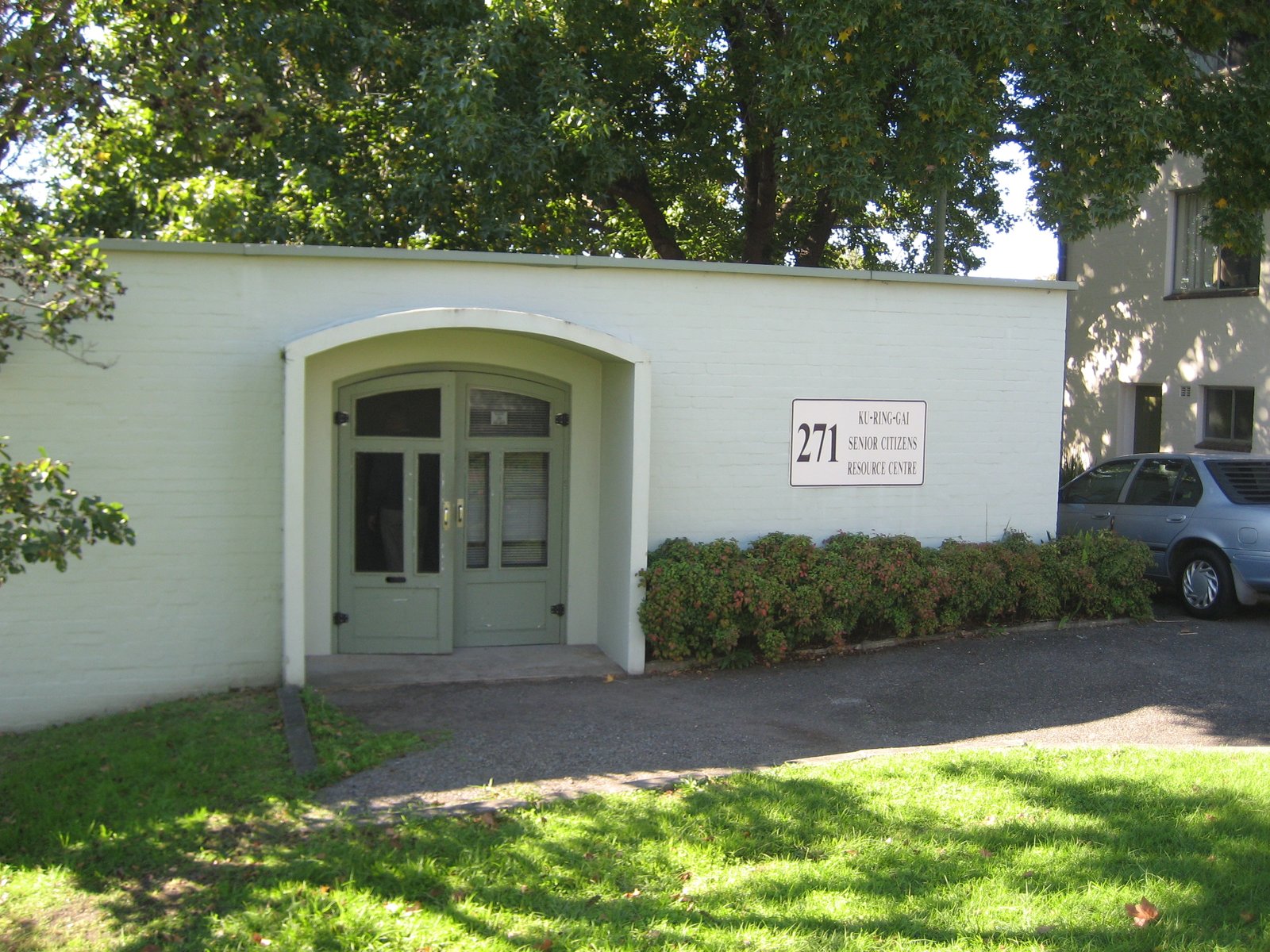
Looking for a Building
Machinery was already starting to arrive — donated and loaned by members and supporters — long before there was anywhere proper to put it. The committee spent this period assessing possible buildings and vacant sites around Ku-ring-gai. None of them worked out: some were structurally inadequate, others ran into opposition from neighbours or from Council staff who weren’t yet sold on the idea of a men’s shed.
Bringing the Community Along
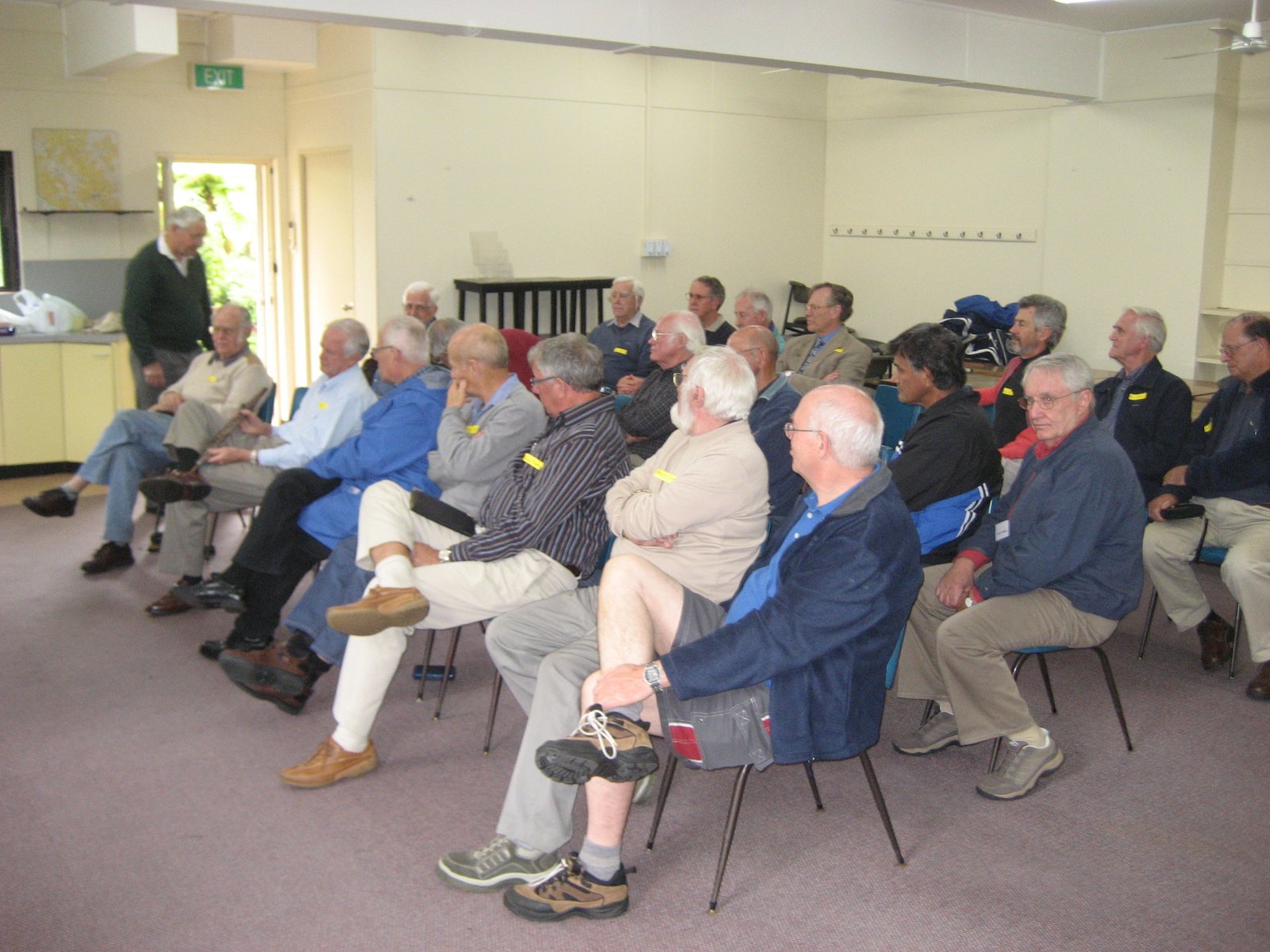
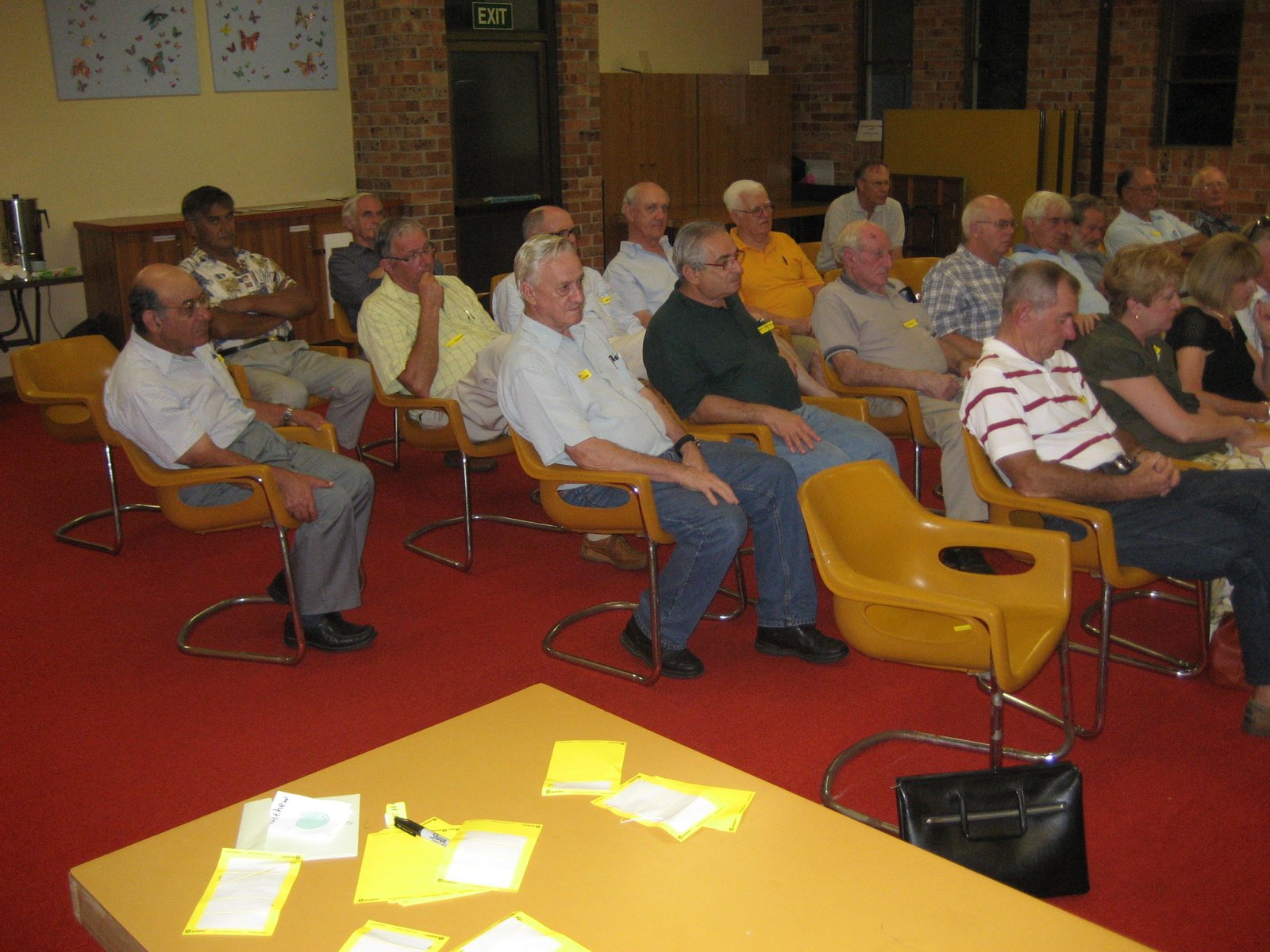
Gaining Council’s support was essential, and it didn’t come easily at first — initial reception from Ku-ring-gai Council and some staff was lukewarm, though the Mayor of the day was supportive once he understood what was being proposed. Community meetings, like this one held at a St Ives church hall in February 2009, helped build the local support and numbers the fledgling Shed would need.
The First Machines Arrive
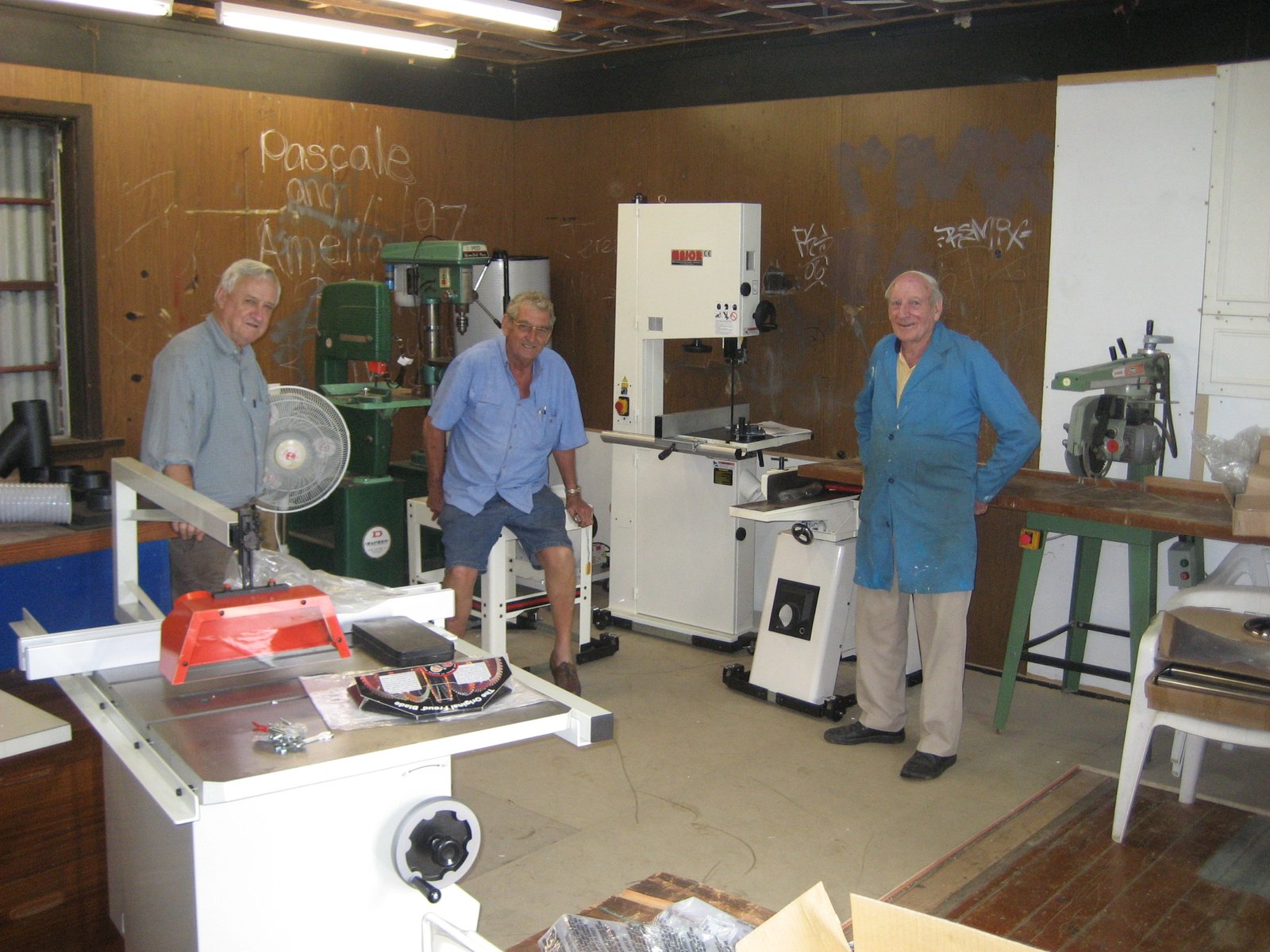
By early 2009, the derelict sports building at Howson Oval had been earmarked as interim storage — but the building itself hadn’t been fixed up yet. Wall panelling was still smashed through to bare brick, the floor was still rotten, and graffiti from years of disuse still covered the walls. None of that stopped the first real machinery from turning up: a bandsaw, drill press and radial arm saw, proudly shown off by members right there in the derelict shell. It’s as good a picture as any of where this all started — and from here, the story continues with the repair of Howson Oval itself.